Squash Flooring for Schools and Colleges: What Administrators Should Know
When it comes to creating high-quality athletic environments, the right facility investments can make a lasting impact on student experience, safety, and program success. Squash—one of the fastest-growing court sports in the academic world—requires a specialized flooring system unlike any other athletic surface. For school and college administrators evaluating new courts or planning renovations, understanding the fundamentals of proper squash flooring is essential.
This guide outlines what makes squash flooring unique, the materials most commonly used, and the critical design and maintenance considerations that ensure long-term performance.
Why Quality Squash Flooring Matters For Schools
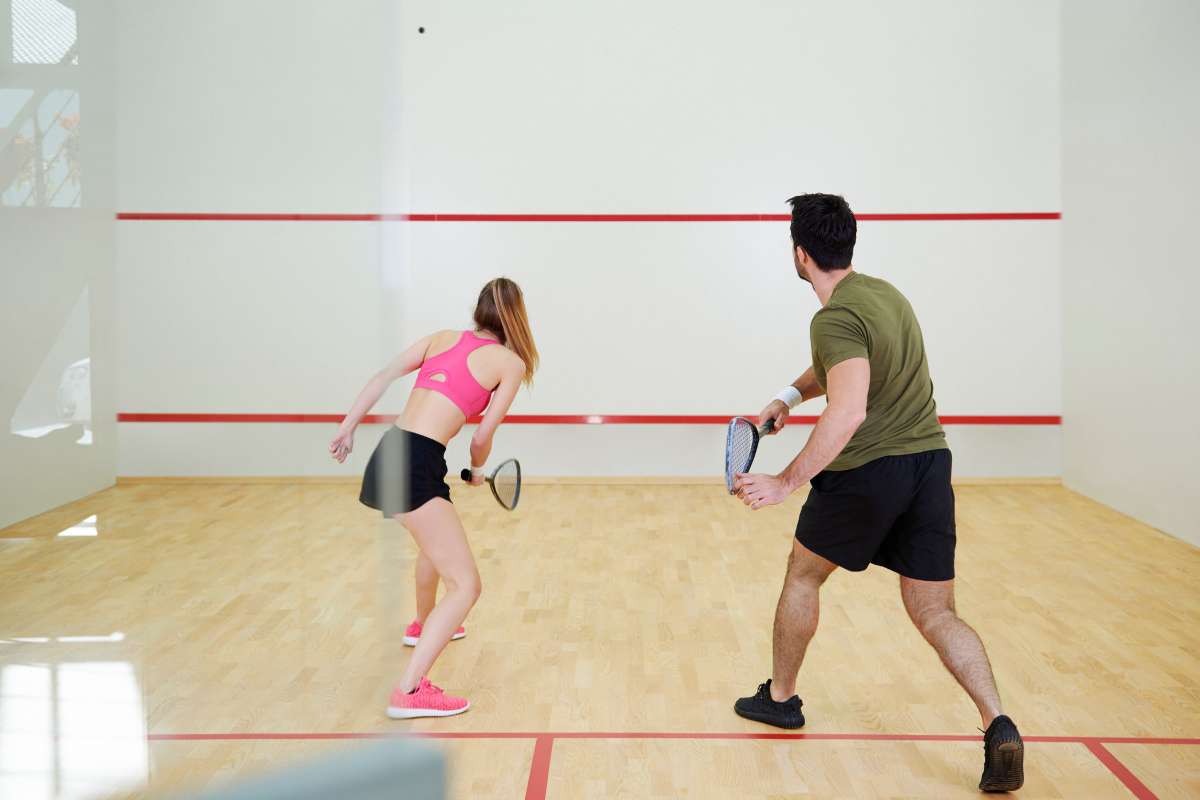 Flooring plays a defining role in how a squash court performs. Because squash is a fast, high-impact sport where athletes rely on quick directional changes, courts must provide the right balance of traction, resilience, and consistency. Unlike a typical gym or multipurpose room floor, squash flooring is engineered specifically to:
Enhance Athlete Safety
A quality system delivers reliable traction and shock absorption, which reduces the risk of slips, muscle strain, and joint injuries—especially important for younger or developing players.
Ensure Consistent Playability
The floor must provide uniform ball response and stable footing across the entire court. Even small inconsistencies can affect competitive play.
Lower Long-Term Costs
A properly designed squash floor lasts significantly longer and requires fewer major repairs than inappropriate or low-quality surfaces.
Common Squash Flooring Materials
 Hard Maple
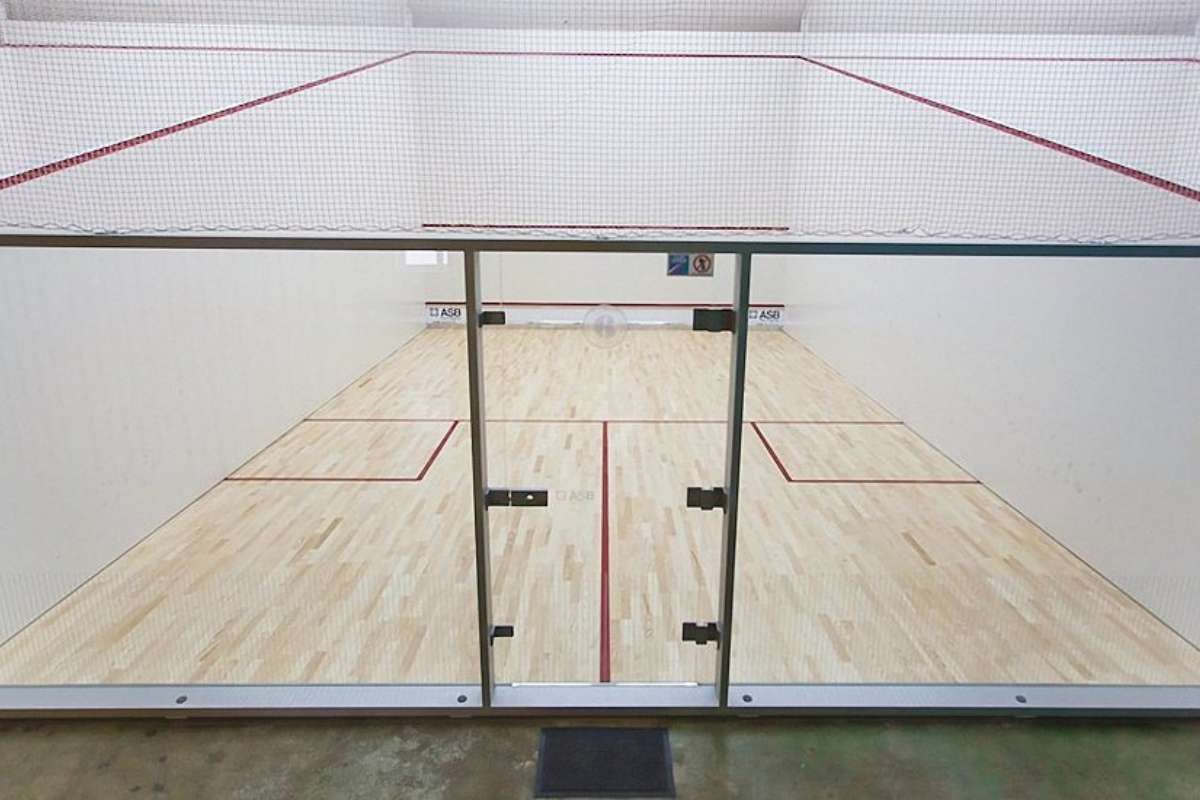
The gold standard in North America, hard maple is widely preferred for its density, strength, and predictable ball bounce behavior. When installed over a resilient subfloor system, it delivers exceptional durability and consistency. Its long life span also makes it a cost-effective choice for high-use facilities.
Beech and Ash (Engineered)
More common in European squash centers, engineered beech and ash offer a slightly softer feel underfoot and a light, clean appearance. While more budget-friendly upfront, these surfaces typically have a shorter lifespan than solid maple.
Design and Installation Considerations For Squash Courts
Subfloor Systems
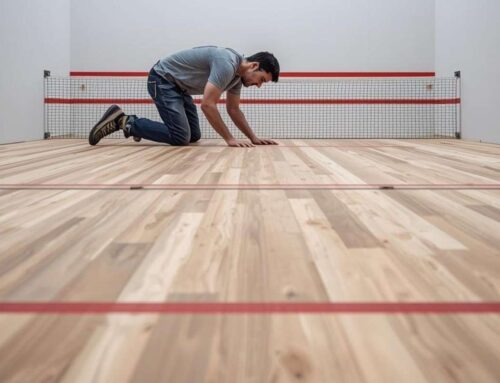
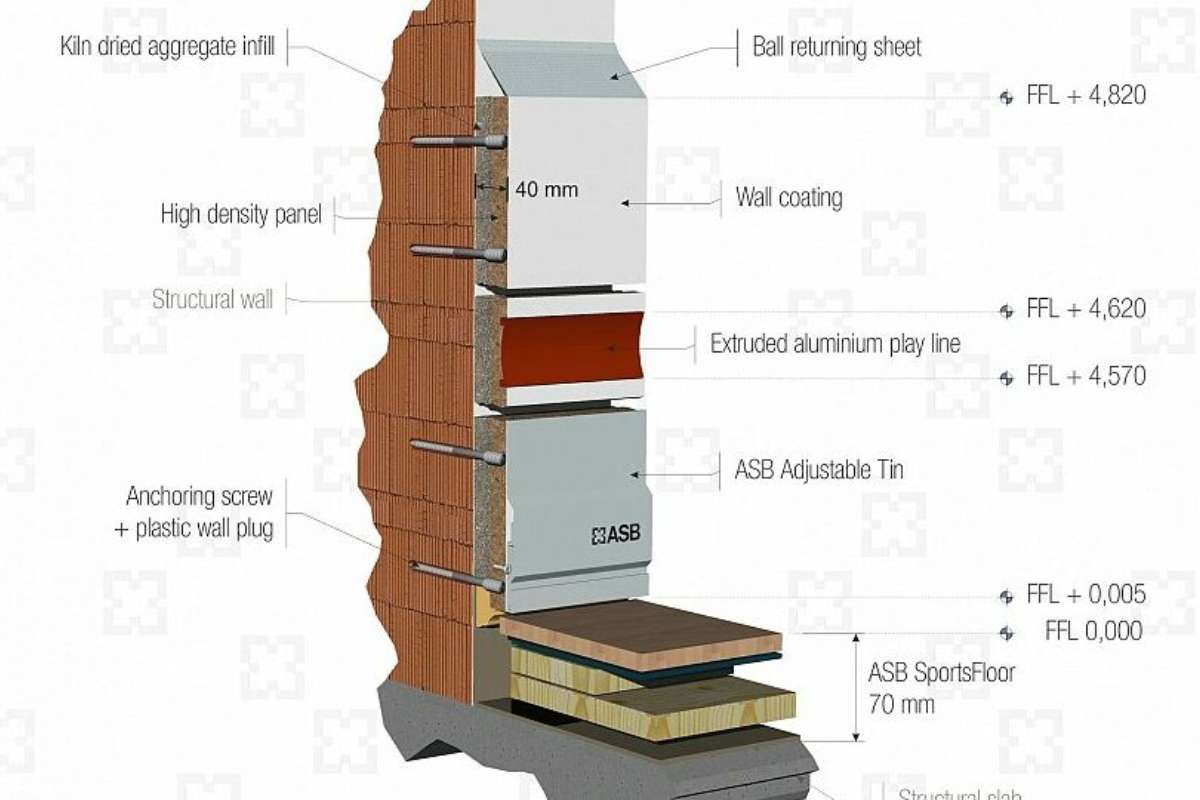 A high-quality squash floor relies on a stable, level concrete slab topped with a resilient subfloor—often rubber pads or a sleeper system. This structure provides shock absorption and consistent bounce from wall to wall. Without it, athlete comfort, safety, and overall performance are compromised.
Environmental Controls
Since wood is sensitive to temperature and humidity, climate control is essential. Facilities should maintain 35–50% humidity year-round. Failing to regulate moisture levels can lead to gaps between boards, swelling, or floor unevenness—all of which disrupt play and require costly repairs.
Line Markings and Surface
Squash court lines must be painted with precision to meet competitive standards. Additionally, squash floors are intentionally left unfinished to preserve traction. This means maintenance staff should avoid damp mopping and cleaners that leave behind residue or film.
Maintenance and Longevity of Squash Flooring
With proper care, squash flooring can last decades—especially solid maple systems.
Typical Lifespan
- Engineered Wood Floors: 5–10 years
- Solid Maple Floors: 30–40 years
Essential Maintenance Practices
- Daily Dust Removal: Prevents debris buildup that wears down the wood flooring surface.
- Routine Inspections: Identify loose boards, small gaps, or surface inconsistencies early.
- Periodic Re-Sanding: Recommended every 8–10 years to refresh traction and playing quality.
- Humidity Monitoring: Ensures long-term structural stability.
Proactive care significantly reduces long-term repairs and preserves safe, playable court conditions.
Why Partner with Endurance Flooring For Your School’s Squash Courts
As squash grows in popularity across colleges, prep schools, and athletic centers, choosing the right flooring partner becomes invaluable. Endurance Flooring specializes in high-performance sports flooring systems designed for institutional environments.
Schools that work with Endurance Flooring benefit from:
- Expert Material Guidance: Recommendations tailored to usage levels, budget, and long-term performance goals.
- Precision Installation: Certified installation teams ensure each court meets professional athletic and safety standards.
- Ongoing Support: From seasonal inspections to long-term maintenance planning, Endurance Flooring helps maximize the value and longevity of your courts.
Endurance Flooring is committed to delivering safe, durable, and competition-ready squash court floors that support student-athletes for years to come. Contact our team today to request a quote.