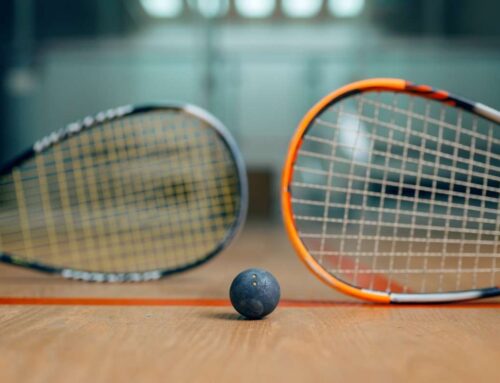

Why Squash Court Flooring Construction Needs Precision Engineering
When people think about squash court design, most attention goes to the walls. The rebound, angles, and visual clarity of the playing surface understandably dominate the conversation. Yet one of the most common misconceptions in squash facility construction is that the floor plays a secondary role. In reality, squash court flooring is just as critical to performance, safety, and competitive integrity as the walls themselves.
A squash floor is not simply a durable hardwood surface. It is a highly engineered athletic system designed to withstand constant high-impact movement while delivering consistent ball behavior, reliable traction, and carefully measured shock absorption. While some facilities rely on engineered finished flooring products, a fully constructed maple finished floor system is exponentially more durable and better suited to the physical demands of squash. True squash court flooring construction requires precision engineering, not shortcuts.
At its core, professional squash flooring must deliver three technical outcomes: consistent ball bounce, reliable traction, and controlled shock absorption. Together, these characteristics influence how the game is played, how safe athletes remain, how long the floor lasts, and whether a court can support competitive play over time.
The Unique Demands of Squash Flooring
Squash is fast-pace. Within the small 672 square foot court, players accelerate, decelerate, pivot, lunge, slide, and jump repeatedly throughout each rally. These movements happen in rapid succession and often in confined spaces, placing extreme stress on both the athlete and the playing surface.
Every rally involves explosive starts, abrupt stops, deep lunges, and quick directional changes. Over the course of a match, these movements are repeated hundreds of times. The squash floor must absorb this punishment while maintaining predictable ball behavior, safe foot traction, and impact protection for joints.
Unlike decorative wood floors, squash flooring functions as a tuned athletic surface. Its performance characteristics must remain stable under constant stress. Any compromise in construction quality quickly becomes evident through inconsistent play, increased injury risk, and accelerated surface wear.
Core Performance Requirements of Professional Squash Floors
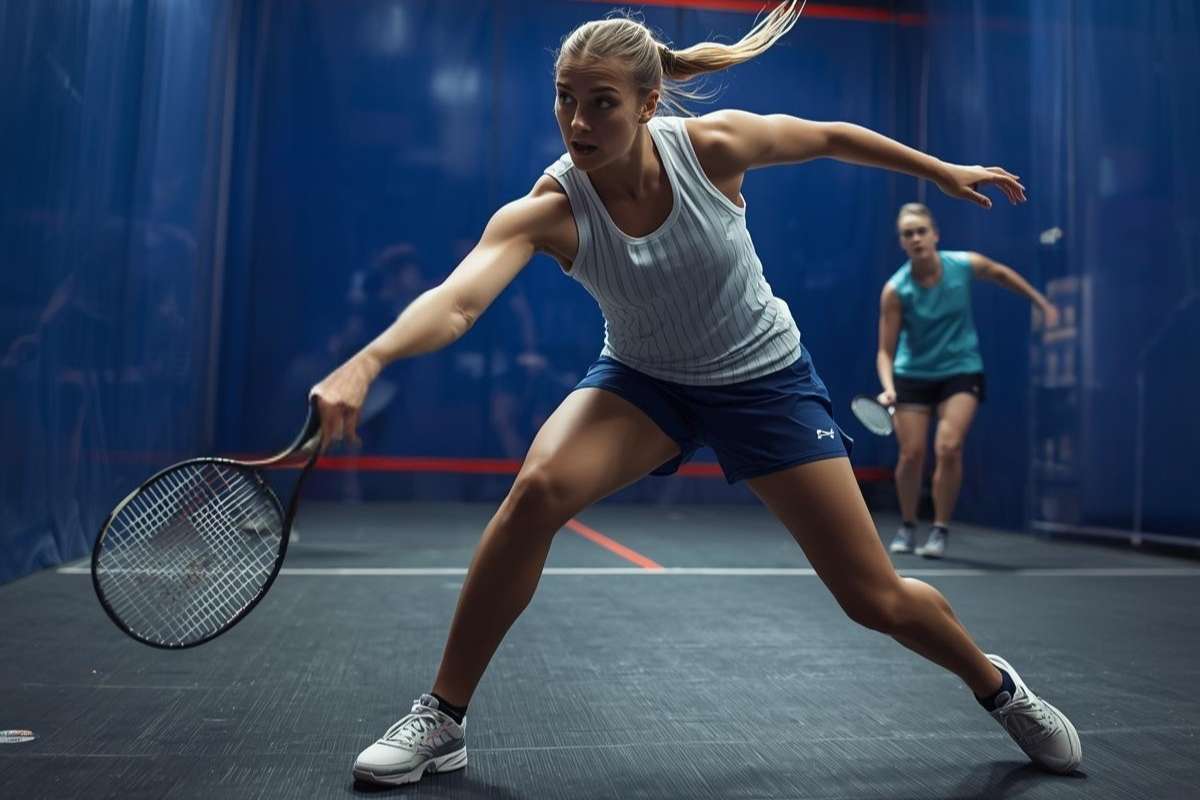 1. Consistent Ball Bounce
Uniform ball bounce is essential for fair and competitive squash. Players rely on predictable rebound height and trajectory to read shots, position themselves correctly, and execute precise returns. Even minor inconsistencies in the floor surface are noticeable by novice players, and disrupt true bounces and gameplay.
Uneven subfloors, poorly installed planks, or surface irregularities can cause dead spots or unpredictable rebounds. When ball behavior varies across the court, competitive balance is compromised. At the professional and club level, consistent bounce is a direct indicator of court quality and construction precision.
2. Reliable Traction
Squash demands rapid changes in direction, often from full sprint to complete stop. The floor must provide controlled grip that allows players to push off confidently without slipping. Surfaces that are too slick increase the risk of falls and sudden injuries.
Conversely, floors that are too sticky create excessive friction, placing dangerous stress on knees, ankles, and hips during pivots and lunges. Proper squash flooring achieves finely calibrated surface friction, allowing controlled sliding and fast footwork without locking the foot in place.
3. Shock Absorption and Joint Protection
The physical strain of squash is intense. Deep lunges, jumps, and abrupt stops generate repeated impact forces that travel through the feet and into the lower body. Similar to basketball and other court sports, knees, ankles, and backs are especially vulnerable.
Precision-engineered squash floors incorporate measured “give” that absorbs impact energy before it reaches the athlete. Proper shock absorption reduces fatigue, supports longer play sessions, and significantly lowers the risk of overuse injuries. Over time, this protection becomes essential for player longevity. However, it’s a delicate dance between a shock absorbing floor and a floor that plays too soft for traditional gameplay. Consult with an expert on proper flooring system selection and installation.
The Precise Engineering Behind Squash Court Flooring Construction
Professional squash court flooring relies on custom materials and layered construction systems designed to meet strict technical standards. These courts are not built with single-layer planks or surface-only solutions. Precision design and installation are non-negotiable.
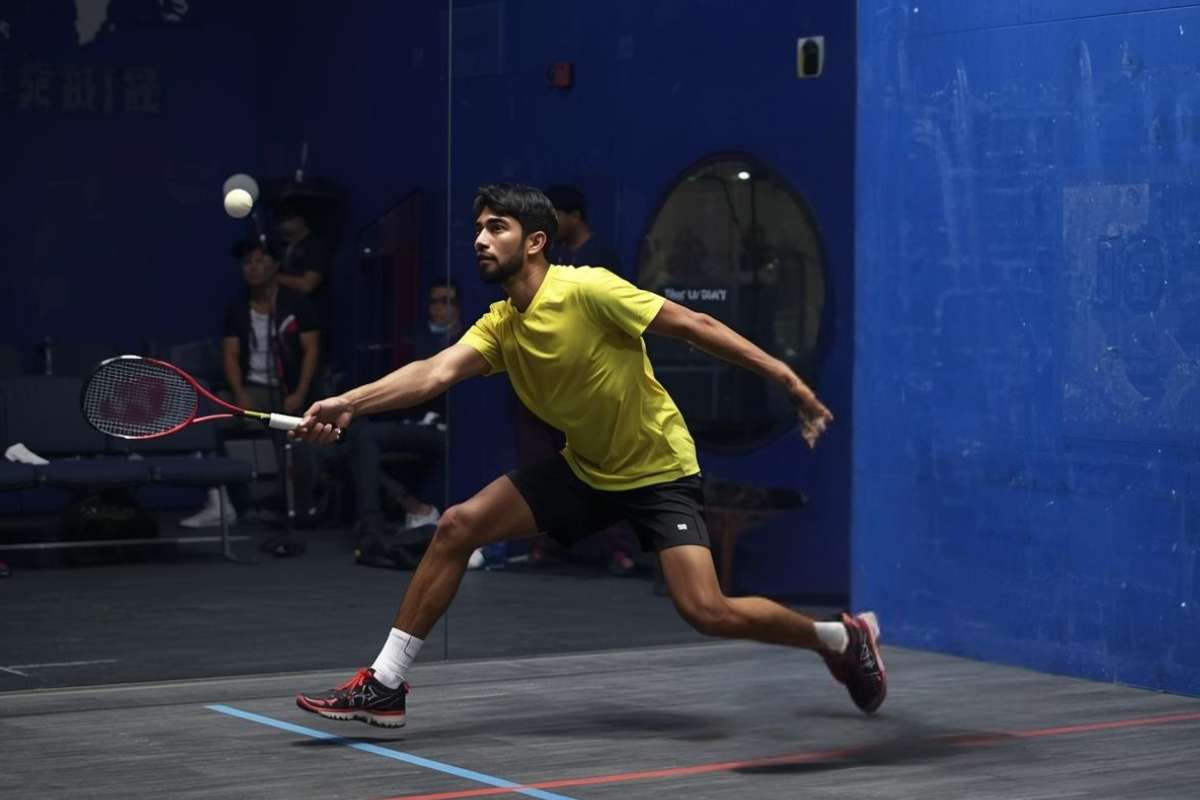 Multi-Layer Construction and “Sprung Floor” Dynamics
Squash floors are built as layered systems. Beneath the visible hardwood surface lies a substructure designed to absorb impact and distribute loads evenly. This undercarriage may include resilient pads, precise subfloor construction, and engineered cushioning elements that create a sprung floor effect.
The wear surface is typically high-quality hardwood such as maple, chosen for its durability, natural resilience, and consistent ball response. This layer balances energy return with shock absorption, ensuring performance without excessive stiffness.
Surface care and maintenance are equally important. Proper cleaning techniques prevent slipping while allowing controlled movement. Routine care preserves traction.
Precision in Leveling, Joints, and Surface Uniformity
Floor Leveling Requirements
Squash floors must be level within extremely tight tolerances. Even small deviations across the court can alter ball bounce and player movement. Professional installations adhere to strict flatness requirements to ensure uniform play across every square foot.
Poor leveling creates unpredictable rebounds, visual distractions, and long-term structural issues. Precision leveling is foundational to squash court performance.
Joint and Seam Precision
Floorboard joints must be virtually flush. Allowable gaps are extremely small, as even minor seams can disrupt ball travel or create tripping hazards. Precision milling and expert installation ensure seamless transitions between boards.
Environmental Control
Wood flooring responds to changes in humidity and temperature. Proper installation tactics allow the floor to move naturally without warping or buckling. Without adequate environmental control, moisture fluctuations can distort the surface and degrade the entire system.
Neglecting humidity management often leads to premature floor failure, costly repairs, and compromised play quality.
Why Precise Squash Court Floor Specifications Matters for Players and Clubs
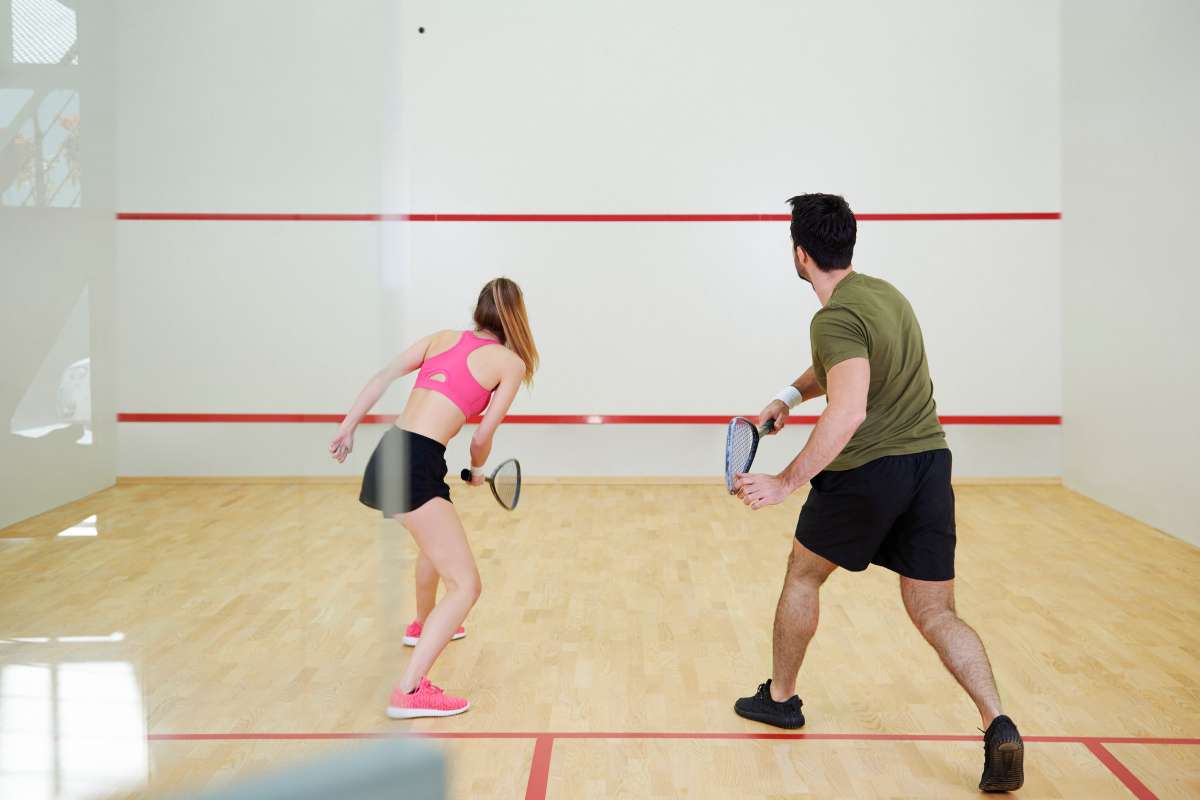 Consistent Play Quality
Consistent play quality is one of the most noticeable benefits of precision-engineered squash flooring. Players expect predictable bounce, controlled traction, and reliable movement regardless of court location.
Safety and Athlete Health
Safety is equally important. Proper shock absorption and traction reduce the risk of slips, fatigue-related injuries, and chronic joint stress. For clubs, this translates into healthier members and fewer liability concerns.
Longevity and Cost Effectiveness
While engineered squash floors may carry higher upfront costs, their long-term durability makes them more cost-effective. Reduced maintenance, fewer repairs, and longer replacement cycles protect the investment.
Competitive Credibility
Finally, competitive credibility depends on standards-based construction. Tournament-ready courts enhance a facility’s reputation and open doors to hosting sanctioned events.
Squash Court Flooring Construction That Powers Performance
Precision engineering is the foundation of professional squash court flooring. From subfloor structure and moisture control to wood selection, surface finishing, and installation accuracy, every detail matters.
Endurance Flooring approaches squash court construction with this level of discipline, delivering systems designed for performance, safety, durability, and competitive credibility. For facility owners, clubs, and developers, investing in precision-engineered squash flooring is an investment in the future of the game itself.